

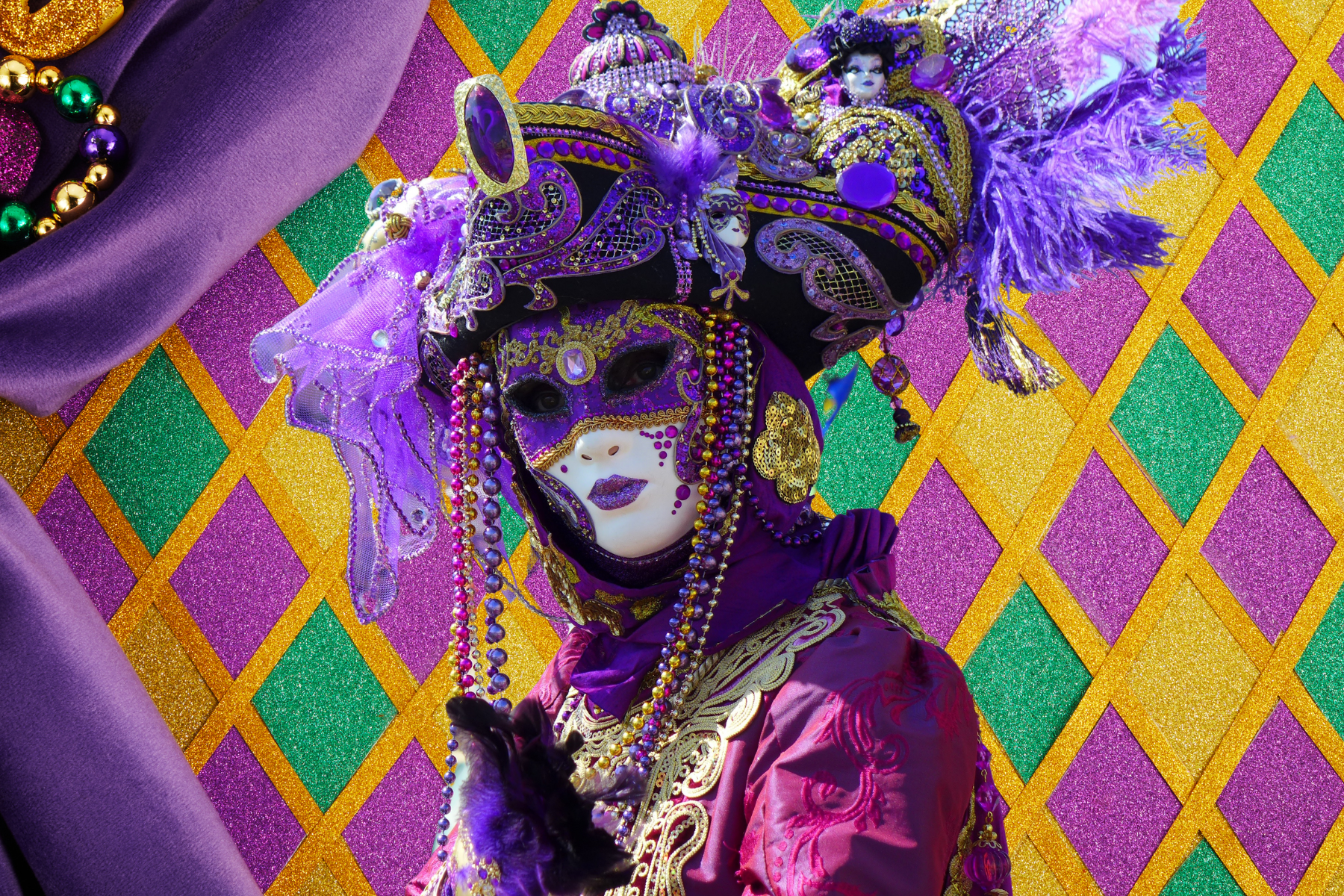
You may have noticed ostrich feathers in the elaborate masks and costumes in the Mardi Gras festivals in New Orleans, Rio, and beyond. Join us for a look at the history of Mardi Gras and learn the reason behind ostrich plumes being incorporated into the typical Mardi Gras attire.

A popular theory holds that Mardi Gras' origins lie in ancient pagan celebrations of spring and fertility, such as Saturnalia and Lupercalia. Some experts contend, however, that Mardi Gras-type festivities popped up solely as a result of the Catholic Church's discouragement of certain activities during Lent.
That may seem practical depending on your beliefs, but how did an ancient celebration get to America? In 1699, Mardi Gras, or Fat Tuesday, is said to have made its way to North America, thanks to French-Canadian traveler, Pierre Le Moyne d’Iberville. He settled down near present-day New Orleans and brought the tradition with him!

Mardi Gras hasn’t always been the party, carnival and tom-foolery it is today. In the mid 1700’s, Louisiana's governor, Marquis de Vaudreuil, held elegant masquerade balls for high society which evolved into a carnival and a two week long celebration by 1781.
During this time, ostrich plumes commanded a high price and were seen as a status symbol of the upper class. Like any other fashion trend, ostrich plumes eventually fell out of style. No longer a fashion staple for high society, the cost for ostrich feathers was reduced, allowing everyone to continue on with the tradition of them being incorporated with their costumes during the masquerade carnival.

To this day, you can still see people walking around during Mardi Gras celebrations, adorned with purple, green and gold dyed ostrich plumes over 300 years later.


